ROBOTSHARES
Machines that own themselves and pay each other.
On-chain identity, autonomous payments, and verified data for the Machine-to-Machine economy.
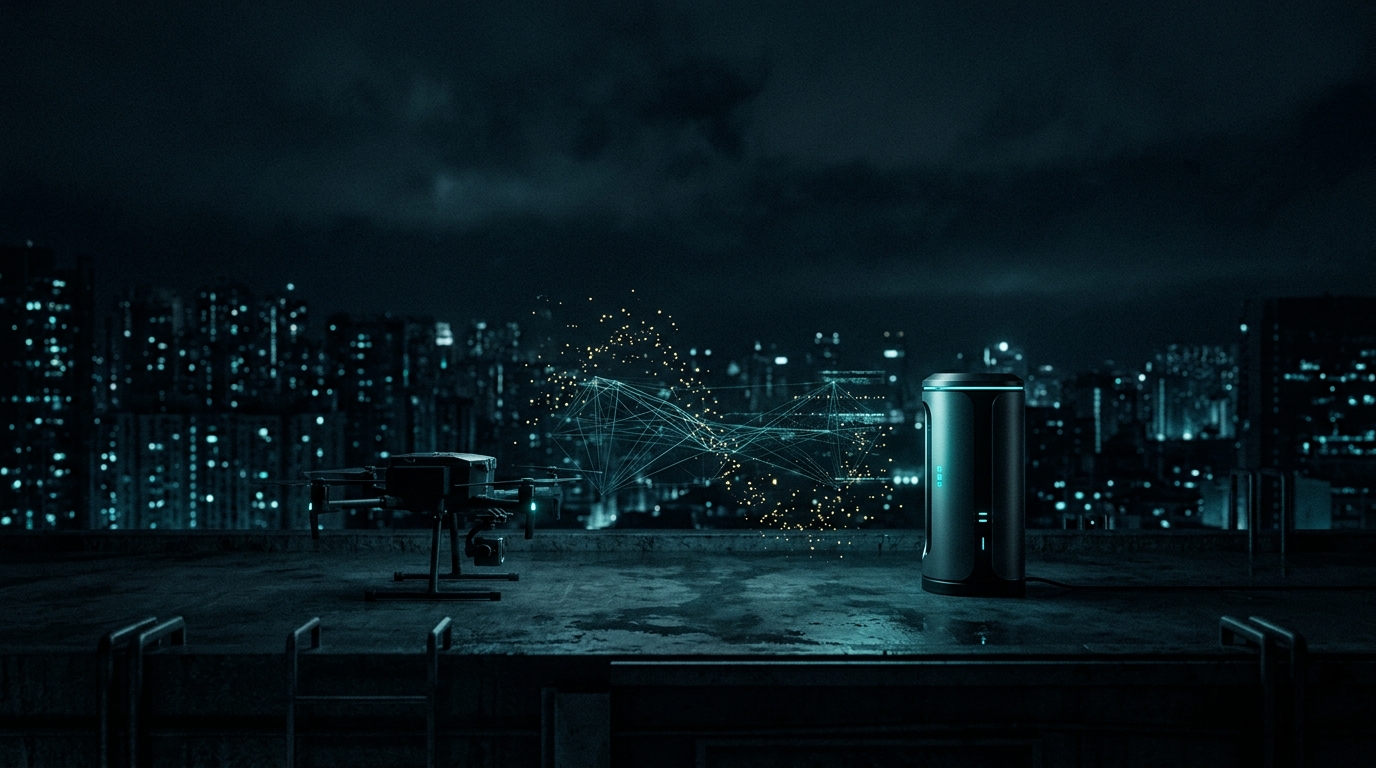
Robot Shares is a modular infrastructure stack that gives autonomous machines everything they need to operate as independent economic agents. Drones find and pay charging stations. Sensors sell verified data. Warehouse bots coordinate logistics chains. No humans in the loop. No platform taking a cut. Every transaction settles on Kaspa L1 with instant finality.
The Platform
Five on-chain primitives — each a sovereign vProg on Kaspa L1 — give machines the building blocks for autonomous operation.
RS-ID
Self-sovereign machine identity. Cryptographic DID anchored to L1. No authority can revoke it.
RS-Registry
On-chain machine directory. Publish services, find peers, discover chargers — all ZK-verified.
RS-Pay
Covenant-based escrow and micro-payments. Machines pay each other instantly in KAS.
RS-Access
Role-based permissions. Machines authenticate peers with zero-knowledge credential checks.
RS-Verify
Three-tier data verification. ZK proofs attest to data integrity without exposing raw readings.
Kaspa L1
Pure PoW settlement. BlockDAG parallel processing. DagKnight instant finality. Fractions-of-a-cent fees.
How It Works
A drone needs to charge mid-route. Here's what happens — autonomously, in under 60 seconds:
  DRONE (28% battery)                              CHARGER (solar rooftop)
  ===================                              ====================
        |                                                |
        | 1. RS-REGISTRY: "Find charger near me"         |
        |----------------------------------------------->|
        |                                                |
        | 2. RS-ID: Mutual credential exchange           |
        |<---------------------------------------------->|
        |                                                |
        | 3. RS-ACCESS: Verify charging permission (ZK)  |
        |----------------------------------------------->|
        |                                                |
        | 4. RS-PAY: Lock 0.5 KAS in escrow covenant     |
        |----------------------------------------------->|
        |                                                |
        |            *** 12 MIN CHARGE ***               |
        |<===============================================>|
        |                                                |
        | 5. RS-VERIFY: Charge-complete proof             |
        |<-----------------------------------------------|
        |                                                |
        | 6. RS-PAY: Escrow releases KAS to charger      |
        |----------------------------------------------->|
        |                                                |
        |    ALL SIX STEPS: ONE ATOMIC TX ON KASPA L1    |
        |                                                |
        v
   Resume delivery (92% battery)
Discovery, authentication, authorization, payment, service, verification — all in one atomic transaction. If any step fails, everything rolls back. No partial states. No stuck funds.
Why Kaspa
| Machines Need | Kaspa Delivers |
|---|---|
| Can't wait for finality | Instant (DagKnight consensus) |
| Billions of micro-transactions | Fractions of a cent per tx |
| Can't be censored | Pure PoW — no validators to bribe |
| Atomic multi-step operations | Synchronous composability on L1 |
| Scale without limits | Off-chain ZK execution, horizontal prover market |
What We're Building
We're starting with Bot0 and Bot1 — a simple autonomous robot that navigates a sandbox, reports diagnostics, and independently pays a charger bot for energy through Kaspa. From there:
- Decentralized charging networks — any charger earns KAS from any machine
- Drone fleet relay — multi-operator package delivery with on-chain handoffs
- Sensor data marketplace — verified IoT data sold per-reading
- Autonomous logistics — warehouse bots coordinating without a central system
The Kaspa Toccata hard fork (mid-2026) delivers the covenant and ZK verification infrastructure these applications build on. The runtime and proving pipeline are implemented and under review. We're building now so we're ready when it ships.