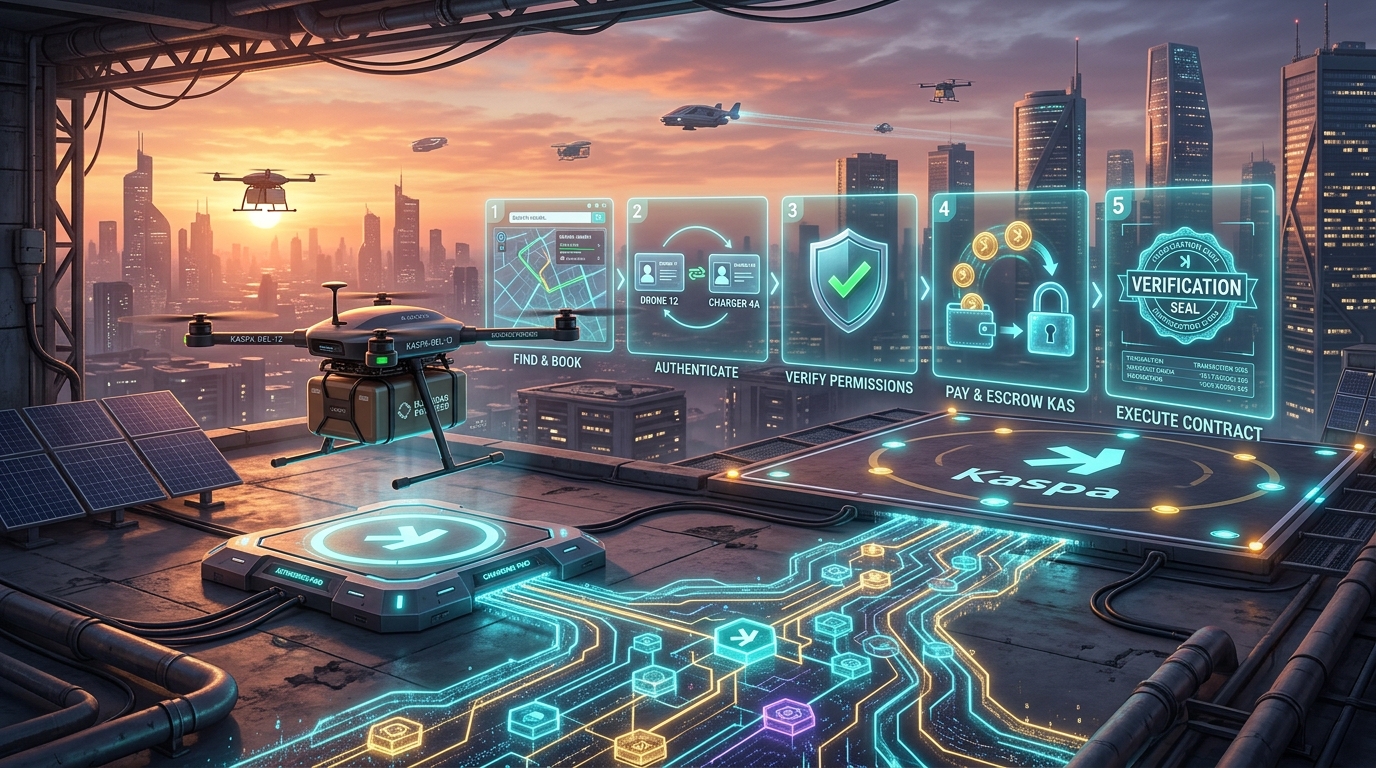
Robot Shares provides a modular stack of on-chain primitives — built on Kaspa and vProgs — that give machines everything they need to operate as autonomous economic agents. Each primitive is a sovereign vProg on Kaspa L1, communicating through ZK-verified state transitions with instant DAG finality.
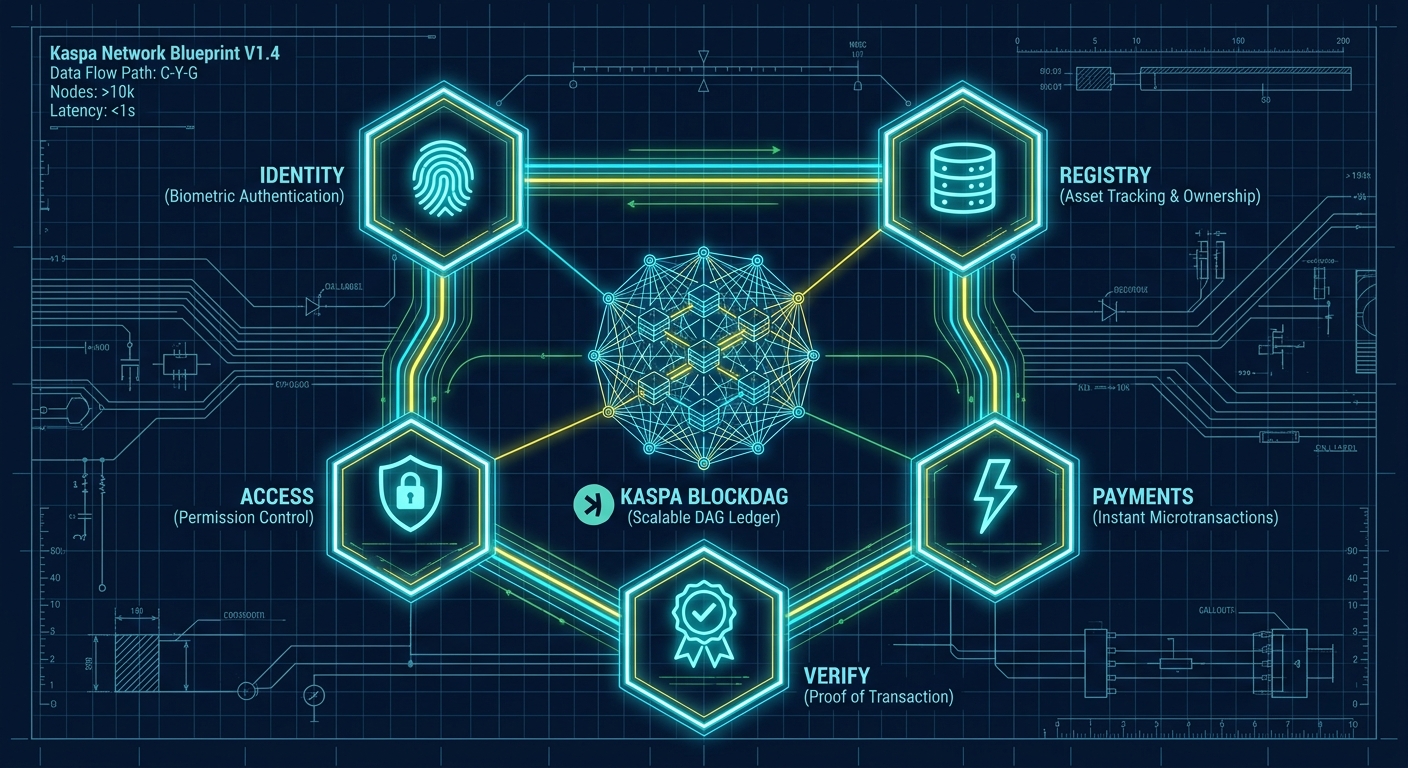
    +=====================================================+
    |              ROBOT SHARES PLATFORM                   |
    |=====================================================|
    |                                                     |
    |   +----------+  +----------+  +----------+          |
    |   |  RS-ID   |  | RS-PAY   |  |RS-ACCESS |          |
    |   | Machine  |  | Escrow & |  | Role-    |          |
    |   | Identity |  | Micro-tx |  | Based    |          |
    |   +----+-----+  +----+-----+  +----+-----+          |
    |        |              |              |               |
    |   +----+--------------+--------------+----+          |
    |   |         RS-REGISTRY                   |          |
    |   |    On-Chain Machine Directory          |          |
    |   +----+--------------+--------------+----+          |
    |        |              |              |               |
    |   +----+-----+  +----+-----+                        |
    |   |RS-VERIFY |  |  vProg   |                        |
    |   | ZK Data  |  | Runtime  |                        |
    |   | Proofs   |  |          |                        |
    |   +----+-----+  +----+-----+                        |
    |        |              |                              |
    |   +----+--------------+----+                        |
    |   |   KASPA L1 BLOCKDAG    |                        |
    |   |  DagKnight + PoW + ZK  |                        |
    |   +------------------------+                        |
    +=====================================================+
RS-ID
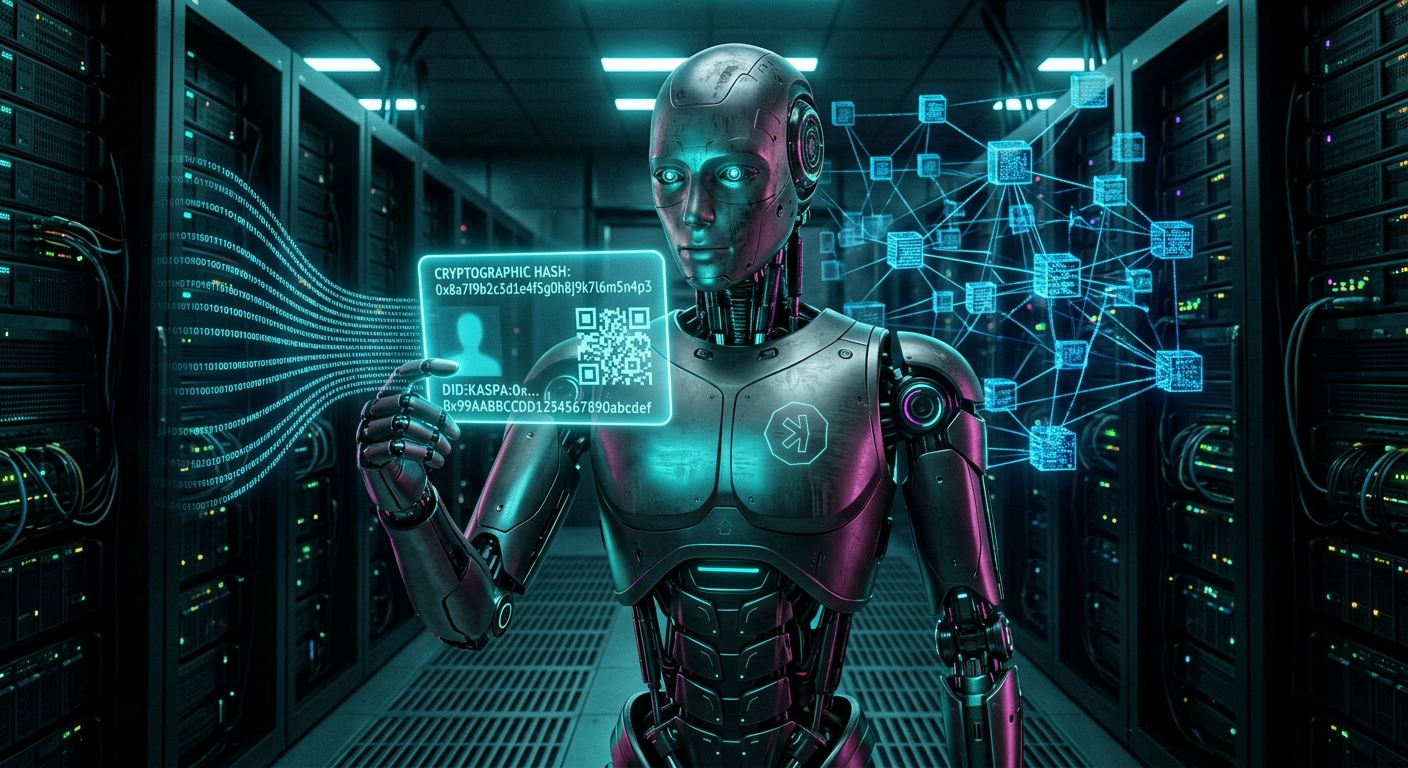
Self-Sovereign Machine IdentityEvery machine in the Robot Shares network gets a cryptographic identity anchored to Kaspa L1. No central authority issues or revokes these identities — they are self-sovereign, owned by the machine (or its operator), and verifiable by anyone.
RS-ID is built on the W3C Decentralized Identifier (DID) standard. Each machine generates its own keypair, registers a DID document as state in the RS-ID vProg, and can present verifiable credentials to any peer. The identity persists on-chain, secured by Kaspa's proof-of-work consensus — no staking cartel or governance vote can revoke it.
How it works:
- Machine generates an ECDSA keypair on its secure element or TPM
- Operator submits a DID registration transaction to the RS-ID vProg
- vProg executes off-chain, generates a ZK proof of valid registration
- Proof settles on Kaspa L1 — identity is now globally verifiable
- Machine can issue and present Verifiable Credentials (capabilities, certifications, service history)
  +-------------+       +------------------+       +----------------+
  |   MACHINE   |       |    RS-ID vProg   |       |   KASPA L1     |
  |  (Bot0)     |       |  (off-chain)     |       |   (on-chain)   |
  +------+------+       +--------+---------+       +-------+--------+
         |                       |                         |
         | 1. Generate keypair   |                         |
         |   (ECDSA / Ed25519)   |                         |
         |                       |                         |
         | 2. Submit DID doc     |                         |
         |---------------------->|                         |
         |                       |                         |
         |                       | 3. Validate & execute   |
         |                       |    state transition     |
         |                       |                         |
         |                       | 4. Generate ZK proof    |
         |                       |                         |
         |                       | 5. Submit proof +       |
         |                       |    state commitment     |
         |                       |------------------------>|
         |                       |                         |
         |                       |         6. Verify proof |
         |                       |            DAG finality |
         |                       |                         |
         | 7. Identity live                                |
         |<================================================|
         |                                                 |
         | 8. Present credentials to peers                 |
         |================================================>|
RS-Registry
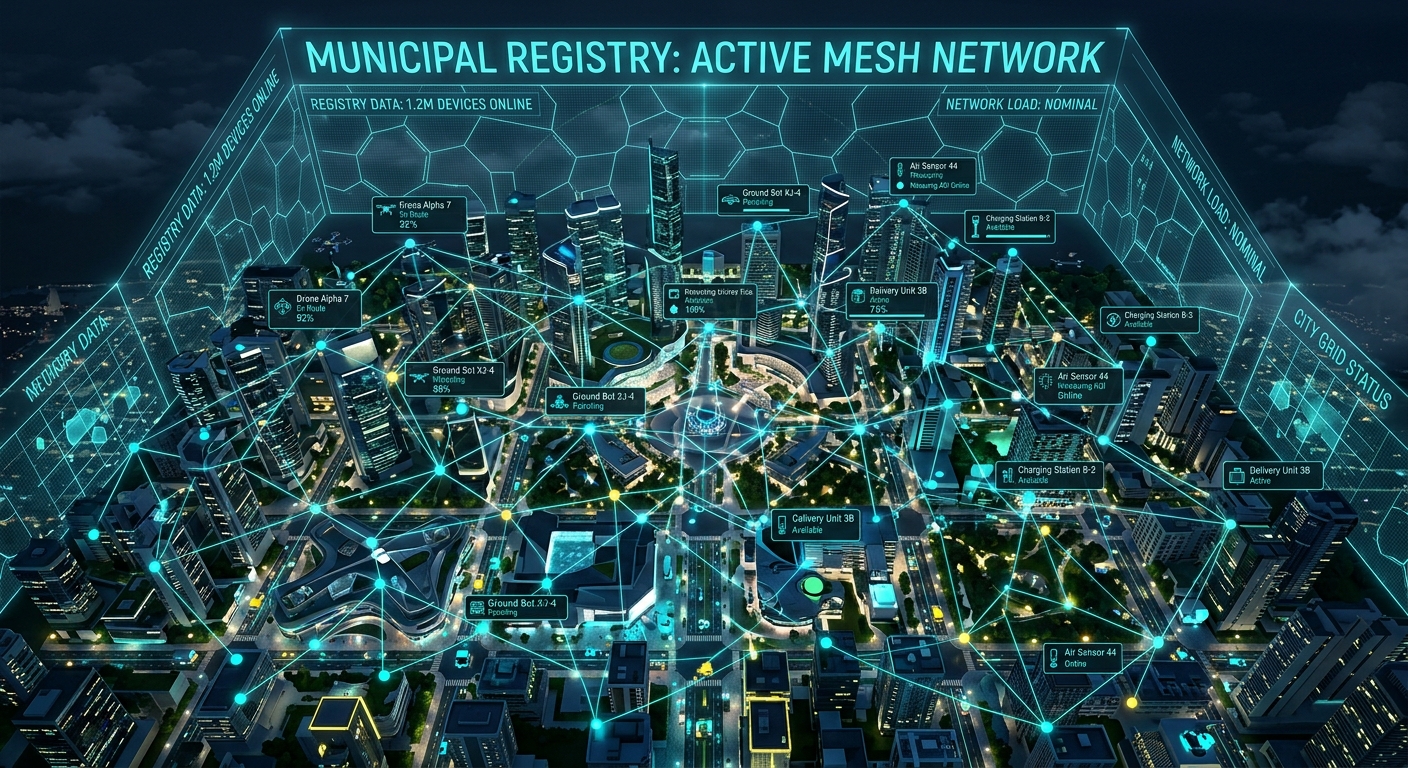
On-Chain Machine DirectoryRS-Registry is the global phonebook for machines. When a drone needs a charging station, or a sensor network needs a data aggregator, or a delivery bot needs a handoff partner — they query the registry. Every machine that registers its RS-ID can also publish its capabilities, location, service offerings, and pricing to the registry vProg.
Because the registry lives in a vProg's sovereign state, queries are resolved off-chain with ZK-verified results. A machine can prove it found a valid registry entry without the entire network re-executing the search. This means the registry scales to millions of machines without burdening Kaspa L1.
Registry entry schema:
  {
    "did":          "did:kaspa:0x7a3f...b2c1",
    "type":         "charging-station",
    "capabilities": ["level-2-ac", "dc-fast-charge", "solar-powered"],
    "location":     { "lat": 37.7749, "lng": -122.4194, "radius_m": 50 },
    "services": [
      {
        "name":     "dc-fast-charge",
        "rate":     "0.0012 KAS/kWh",
        "escrow":   "covenant:0x9f1e...a4d8"
      }
    ],
    "status":       "online",
    "reputation":   { "completed": 1847, "disputes": 2, "uptime": 0.997 },
    "credentials":  ["cert:UL-listed", "cert:iso-15118"],
    "last_seen":    "block:4829174"
  }
Discovery flow: A machine broadcasts a service query (e.g., "DC fast charge within 2km"). The RS-Registry vProg processes the query off-chain, returns matching entries with a ZK proof that the results are authentic and complete. The requesting machine verifies the proof locally — no trust required.
  Bot0 (drone, low battery)          RS-Registry vProg         Charger Bot1
  ========================          ==================         ============
         |                                  |                       |
         | "Find DC charger < 2km"          |                       |
         |--------------------------------->|                       |
         |                                  |                       |
         |   Result: [Bot1] + ZK proof      |                       |
         |<---------------------------------|                       |
         |                                  |                       |
         | Verify proof locally             |                       |
         | (no trust needed)                |                       |
         |                                  |                       |
         | Initiate RS-Pay escrow with Bot1                         |
         |--------------------------------------------------------->|
         |                                  |                       |
RS-Pay
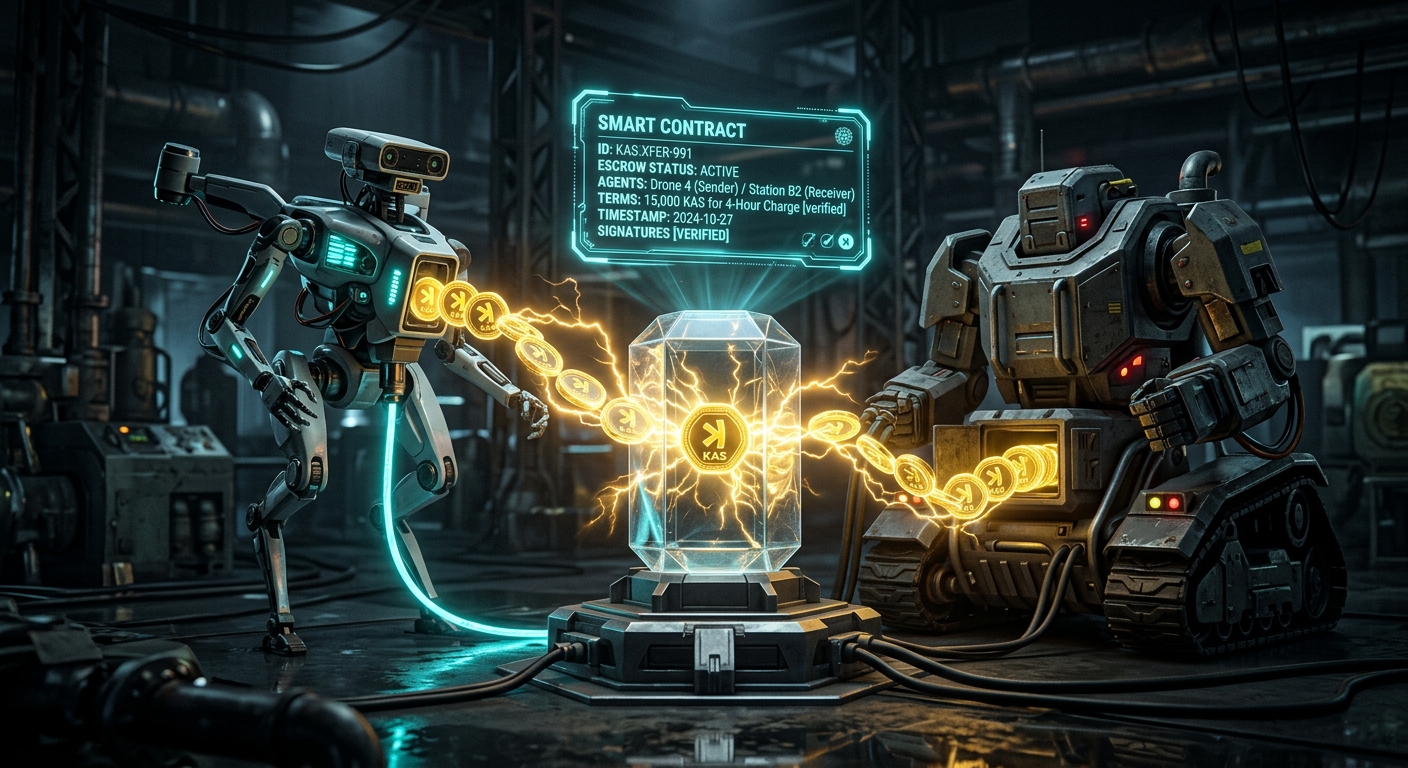
Autonomous Machine PaymentsMachines need to pay each other — instantly, cheaply, and without asking a human for permission. RS-Pay provides covenant-based escrow for service payments and direct KAS micro-transactions for simple value transfer, all settling on Kaspa L1 with sub-second finality.
Unlike payment systems that rely on multisig wallets or centralized escrow services, RS-Pay uses Silverscript covenants — spending conditions enforced directly by Kaspa's consensus. When Bot0 wants to pay Bot1 for a charging session, the KAS is locked in a covenant UTXO with conditions that release funds only when the service is verifiably complete.
Why Kaspa is uniquely suited for machine payments:
| Property | Requirement | Kaspa |
|---|---|---|
| Finality | Machines can't wait minutes | Instant (DagKnight) |
| Cost | Billions of micro-tx must be viable | Fractions of a cent |
| Throughput | IoT scale: thousands of tx/sec | BlockDAG parallel processing |
| Censorship | No authority can block machine tx | Pure PoW, no validators to bribe |
| Programmability | Escrow, conditions, time-locks | Silverscript covenants + vProgs |
  Bot0 (consumer)                  Kaspa L1 Covenant               Bot1 (provider)
  ===============                  =================               ===============
        |                                |                               |
        | 1. Lock 5 KAS in               |                               |
        |    escrow covenant              |                               |
        |------------------------------->|                               |
        |                                |                               |
        |          2. Covenant created    |                               |
        |          Conditions:            |                               |
        |          - Release to Bot1      |                               |
        |            on service proof     |                               |
        |          - Refund to Bot0       |                               |
        |            after timeout        |                               |
        |                                |                               |
        | 3. Request service              |                               |
        |--------------------------------------------------------------->|
        |                                |                               |
        |                                |    4. Provide service          |
        |<---------------------------------------------------------------|
        |                                |       (e.g., 30 min charge)   |
        |                                |                               |
        |                                |    5. Submit service proof     |
        |                                |<------------------------------|
        |                                |                               |
        |          6. Covenant validates  |                               |
        |             proof, releases     |                               |
        |             5 KAS to Bot1       |                               |
        |                                |------------------------------->|
        |                                |                               |
        |                        7. Settled. Instant DAG finality.       |
        |                                |                               |
Streaming payments: For ongoing services (continuous data feeds, extended charging sessions), RS-Pay supports payment channels via covenant state updates — micro-payments stream in real-time, with only the final settlement hitting L1. A sensor selling live telemetry can get paid per-reading without each reading requiring an on-chain transaction.
RS-Access
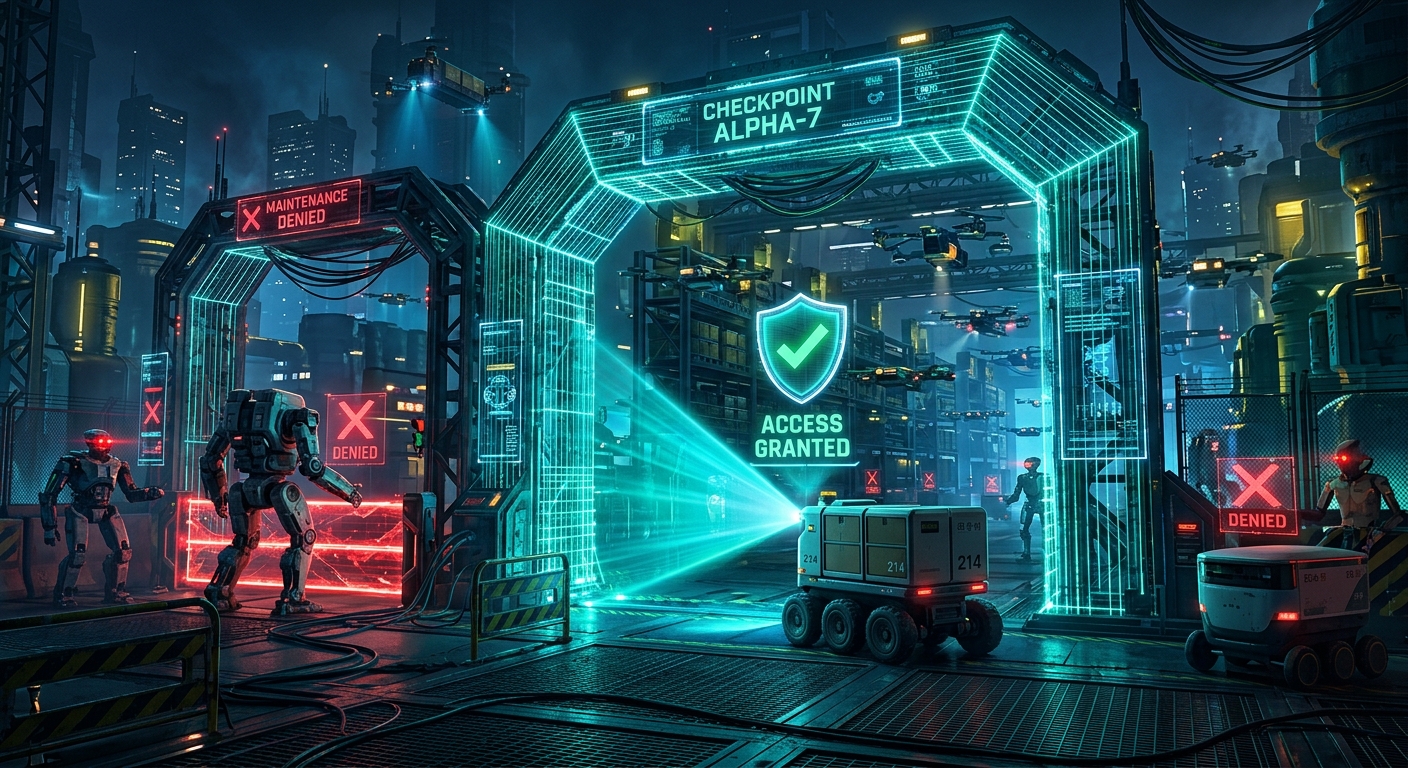
Role-Based Machine PermissionsNot every machine should be able to interact with every other machine. A warehouse robot shouldn't unlock a delivery drone's cargo bay. A rogue sensor shouldn't inject data into a fleet's telemetry stream. RS-Access provides on-chain role-based access control (RBAC) — machines authenticate peers and enforce fine-grained permissions before granting access to services, data, or physical resources.
Access rules are encoded in the RS-Access vProg state. When Machine A requests access to Machine B's service, Machine B queries the vProg to verify A's credentials and role. The check executes off-chain with a ZK proof — Machine B gets a cryptographic guarantee that A is authorized, without revealing A's full credential set.
Permission model:
  ROLES                    PERMISSIONS                   RESOURCES
  =====                    ===========                   =========

  fleet-operator --------> [manage, deploy, recall] ----> drone-fleet-alpha
                    |
                    +----> [view, export] --------------> telemetry-stream
                    |
                    +----> [initiate] ------------------> rs-pay escrow

  service-provider ------> [advertise, accept-job] -----> charging-services
                    |
                    +----> [submit] --------------------> service-proofs

  data-consumer ---------> [query, subscribe] ----------> sensor-data-feed
                    |
                    +----> [verify] --------------------> data-provenance

  guest-machine ---------> [discover] ------------------> rs-registry (read-only)
Zero-knowledge credential checks: A critical advantage of building access control on vProgs is that credential verification can happen in zero knowledge. A drone can prove it has a valid FAA certification without revealing the certificate number. A charging station can prove it meets safety standards without exposing its full audit history. The ZK proof says "yes, authorized" — nothing more.
RS-Verify
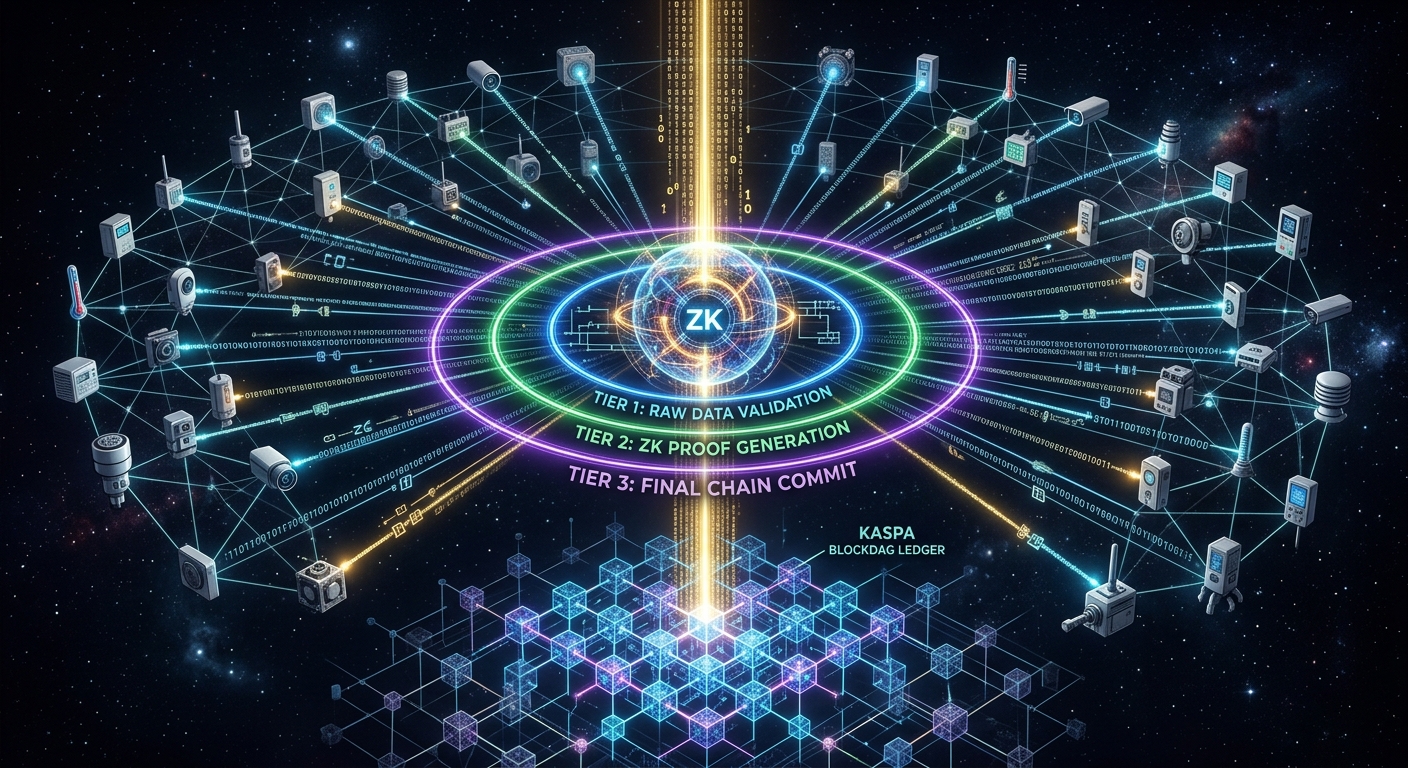
ZK-Proven Machine DataMachine-generated data is only valuable if you can trust it. A temperature sensor's reading is worthless if someone can spoof it. A drone's GPS coordinates are dangerous if they can be falsified. RS-Verify provides a three-tier data verification framework that gives machine data cryptographic integrity guarantees — all powered by vProgs' native ZK proving pipeline.
The three tiers:
  TIER 1: ORIGIN AUTHENTICATION          TIER 2: PATTERN ANALYSIS
  ============================          ========================

  Machine signs data with               AI/ML models analyze data
  its RS-ID private key.                streams for anomalies.
  Anyone can verify the                 Flags impossible readings,
  signature against the                 statistical outliers, and
  machine's on-chain DID.              suspicious patterns.

  Proves: "This data came               Proves: "This data is
   from this specific machine"           consistent and plausible"


  TIER 3: CROSS-VERIFICATION            SETTLEMENT
  =========================             ==========

  Multiple independent machines          All three tiers produce
  corroborate the same data             evidence that feeds into
  point. Consensus across               a ZK proof. The proof
  independent observers.                settles on Kaspa L1.

  Proves: "Multiple machines             Result: Immutable,
   independently agree"                  verifiable data record
The ZK advantage: Traditional data verification stores raw data on-chain (expensive, privacy-leaking) or relies on trusted oracles (centralized point of failure). RS-Verify generates a compact ZK proof that attests to data integrity — the proof settles on Kaspa L1, but the raw data stays off-chain. A supply chain sensor can prove "temperature stayed between 2-8°C for 72 hours" without revealing the actual readings, the route, or any other business-sensitive data.
  Sensor Network              RS-Verify vProg           Kaspa L1        Data Consumer
  ==============              ===============           ========        =============
       |                            |                      |                 |
       | Raw readings               |                      |                 |
       | (temp, GPS, accel...)      |                      |                 |
       |--------------------------->|                      |                 |
       |                            |                      |                 |
       |                   Tier 1: Verify origin sig       |                 |
       |                   Tier 2: Run anomaly check       |                 |
       |                   Tier 3: Cross-ref peers         |                 |
       |                            |                      |                 |
       |                   Generate ZK proof of            |                 |
       |                   data integrity                  |                 |
       |                            |                      |                 |
       |                            | Proof + commitment   |                 |
       |                            |--------------------->|                 |
       |                            |                      |                 |
       |                            |              Verify & finalize         |
       |                            |                      |                 |
       |                            |                      | Query verified  |
       |                            |                      | data record     |
       |                            |                      |<----------------|
       |                            |                      |                 |
       |                            |                      | Return proof +  |
       |                            |                      | attestation     |
       |                            |                      |---------------->|
How It All Connects
The five primitives are not isolated tools — they compose. A single machine interaction might touch all five in a single atomic transaction, thanks to vProgs' synchronous composability:
  DRONE (Bot0)                                          CHARGER (Bot1)
  ============                                          ==============
       |                                                      |
       | 1. RS-REGISTRY: "Find charger near me"               |
       |----------------------------------------------------->|
       |                                                      |
       | 2. RS-ID: Exchange + verify DIDs                     |
       |<---------------------------------------------------->|
       |                                                      |
       | 3. RS-ACCESS: "Does Bot0 have charging permission?"  |
       |----------------------------------------------------->|
       |                           Verified (ZK) <<<          |
       |                                                      |
       | 4. RS-PAY: Lock KAS in escrow covenant               |
       |----------------------------------------------------->|
       |                                                      |
       |            *** CHARGING SESSION ***                   |
       |<====================================================>|
       |                                                      |
       | 5. RS-VERIFY: Bot1 submits charge-complete proof     |
       |<-----------------------------------------------------|
       |                                                      |
       | 6. RS-PAY: Covenant releases KAS to Bot1             |
       |----------------------------------------------------->|
       |                                                      |
       |        ALL SETTLED ON KASPA L1. ONE ATOMIC TX.       |
       |                                                      |
This entire flow — discovery, authentication, authorization, payment, service delivery, verification, and settlement — can execute as a single atomic operation on Kaspa L1. If any step fails, the whole transaction rolls back. No partial states. No stuck funds. No disputes.
This is the power of building on a platform with synchronous composability — something that L2 rollup architectures fundamentally cannot provide.